
Choosing a Cold Plunge the Whole Household Will Use

A cold plunge that a whole family will actually use needs three things a solo-owner tub doesn’t: enough interior room for different body sizes, a chiller strong enough to recover temperature quickly between back-to-back sessions, and a filtration system built for more frequent use. Single-seat barrel tubs around 30 to 35 inches wide work fine for one regular user, but a household of three or more usually does better with a wider tub in the 40 to 48 inch range and a chiller rated for continuous cycling. Water treatment and turnaround speed matter more here than raw temperature, since the unit needs to reset fast enough that nobody is waiting around in a cold garage for their turn.
What Makes a Cold Plunge Work for More Than One Person?
Interior width is the first thing to check, since a tub sized for one adult of average build can feel cramped for a taller family member or two people trying to alternate quickly. A wider basin also lets the next person get in sooner after a drain-and-refill cycle isn’t needed, which matters a lot for how often a shared unit actually gets used versus how often it sits unused because setup takes too long. Look at the manufacturer’s stated interior dimensions rather than the exterior footprint listed in marketing photos, since exterior measurements can be misleading once insulation and shell thickness are accounted for.
How Much Chiller Power Does Shared Use Require?
A chiller sized for one person’s occasional use often struggles to recover temperature fast enough when three or four people cycle through in an evening. Look at the recovery rate the manufacturer lists, typically measured in degrees per hour, rather than just the horsepower rating, since recovery speed is what determines whether the fourth person in line gets the same water temperature as the first. Households that plunge daily or near-daily across multiple people generally need a unit built for continuous or near-continuous cycling rather than a light-use model designed for two or three sessions a week.
Comparing Shared-Use Setups: Barrel, Inflatable, and Chiller Tub
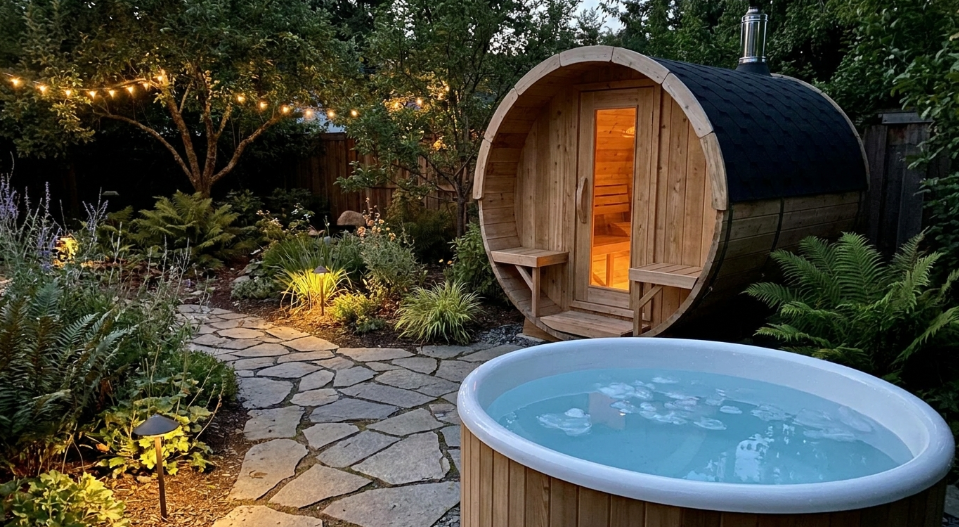
A barrel-style wood or composite tub gives a traditional look and holds temperature reasonably well once chilled, but most models are sized for a single occupant and recover slowly without a dedicated chiller. An inflatable tub paired with a plug-in chiller costs less upfront and can be stored away when not needed, though the softer walls and smaller footprint make it a tighter fit for larger household members. A rigid standalone tub with an integrated chiller and filtration loop costs the most to start but handles frequent, multi-person use with the least manual effort, since water quality and temperature both get managed automatically instead of by hand.
What About Safety Across Different Ages and Health Profiles?
A shared cold plunge means a wider range of tolerance levels under one roof, and that’s worth planning for rather than assuming one setting suits everyone. Cold water immersion produces a sharp, immediate rise in heart rate and blood pressure, which most healthy adults and teenagers handle without issue for short sessions. People with a heart condition, uncontrolled blood pressure, or who are pregnant should approach it more cautiously, and a household with a wide age range does well to set a milder default temperature, somewhere around 50 to 55 degrees, rather than the coldest setting the chiller can reach.
How Do You Keep Water Clean With Regular Multi-Person Use?
More users means more skin oils, sweat, and general organic material entering the water, so sanitizer and filtration matter more here than in a single-user setup. A mineral or chlorine-based sanitizer paired with a mechanical filter handles most household loads, but test strips should come out weekly rather than monthly once several people are using the tub regularly. Full drain-and-clean intervals typically need to shorten too, often to every two to four weeks for a busy household tub versus six to eight weeks for occasional solo use.
What Should a Household Actually Budget?
A wider, chiller-equipped unit built for frequent multi-person cycling generally runs $4,000 to $8,000, compared to $3,000 to $5,000 for a smaller single-user model. Monthly running costs, electricity plus sanitizer and periodic filter changes, land around $30 to $60 for a heavily used household tub. Families weighing whether to size up for shared use can shop the current options at a retailer that lists tub dimensions and chiller specs side by side, which makes comparing recovery speed and interior width across models much easier than reading spec sheets one at a time.
What Filtration Setup Actually Keeps Up With Multiple Users?
Tub volume matters here too. A single-user barrel tub typically holds 90 to 150 gallons, while a wider shared-use tub often runs closer to 180 to 220 gallons, and filtration needs to scale with that volume, not just with how many people use it. Look at the filter’s rated flow, measured in gallons processed per hour, against the tub’s total volume rather than assuming a bigger tub automatically ships with a proportionally bigger filter. An ozone generator is worth the extra cost for a household tub specifically, since it keeps sanitizing continuously between uses without someone needing to remember a manual chemical dose every time a new person gets in, which matters more with three or four users cycling through in an evening than with one person using the tub occasionally.
Does Water Volume Change How Fast the Chiller Recovers?
Yes, directly. A larger tub holding an extra 50 to 70 gallons compared to a single-user model needs a proportionally stronger chiller to hit the same recovery speed between sessions, or the third and fourth person in line end up sitting in noticeably warmer water than the first. When comparing shared-use models, check the chiller’s rated horsepower or cooling capacity against the specific tub’s gallon volume rather than assuming a model marketed for households automatically has a chiller matched to its size. Some manufacturers pair an oversized tub with the same chiller used on their single-person model, which technically works but recovers much more slowly than a household actually needs.
Frequently Asked Questions
What size cold plunge fits more than one person’s routine?
A single-seat barrel around 30 to 35 inches fits one user. Households with several regular users often do better with a 40 to 48 inch tub for faster turnaround.
Can teenagers or older adults safely use a cold plunge?
Healthy teenagers generally tolerate it well. Older adults and anyone with a heart condition should be more cautious and stick to shorter, milder sessions.
Does everyone in a household need their own temperature setting?
No, most chillers hold one setting at a time. Households typically agree on a moderate temperature, often 50 to 55 degrees, that works across different tolerance levels.
How do you keep water sanitary with multiple users?
A filtration and sanitizer system matters more with multiple users. Testing water quality weekly becomes more important as household use increases.
Is a shared cold plunge worth the higher upfront cost?
For three or more regular users, a larger chiller-equipped unit often costs less per person over a year than a small tub used constantly.
References
- “Effects of cold water immersion after exercise on fatigue recovery and exercise performance: meta analysis.” Frontiers in Physiology, 2023. https://pubmed.ncbi.nlm.nih.gov/36744038/
- “Effects of cold-water immersion on health and wellbeing: A systematic review and meta-analysis.” PLoS One, 2025. https://pubmed.ncbi.nlm.nih.gov/39879231/
- “Cardiovascular and Other Health Benefits of Sauna Bathing: A Review of the Evidence.” Mayo Clinic Proceedings, 2018. https://pubmed.ncbi.nlm.nih.gov/30077204/
- “Benefits and risks of sauna bathing.” The American Journal of Medicine, 2001. https://pubmed.ncbi.nlm.nih.gov/11165553/